If you've ever fought a 1,400-lb cow through a tight 22" alley because that was what your grandpa built in 1978, this guide is for you. We design and build cattle handling systems out of our shop in Clay Center, Kansas - for everything from a 30-pair backgrounder up to feedyard-scale unload and sort facilities. Here's how we think about it.
What's in this guide
Flow first: design the work, then build the metal
The biggest mistake we see on Kansas operations isn't bad welding - it's bad layout. A pen system that doesn't flow turns a 2-hour preg-check into a 6-hour rodeo, and the wrecks add up: bruised cattle, broken gates, family arguments, the works.
Before we ever quote a build, we ask the producer:
- Where do cattle come from? Pasture, corn stalks, neighbor's lot?
- Where do they need to go? Working chute, sort pens, load-out, back to the same pen?
- What's the worst job - sorting pairs? Preg-check? AI? Loading semis?
- Who's working them - just you, you and one helper, or a full crew?
- What's the prevailing wind? (Yes, this matters - cattle move better into the wind.)
From those answers, we sketch a flow. Metal comes after.
Bud Box vs sweep tub: pick what fits
The two dominant designs in NCK right now:
Bud Box
A simple rectangular receiving pen - usually 14' wide by 20'–30' long - at the back of a single-file alley. Cattle enter, the handler steps in behind them, and they naturally turn back the way they came... straight into the alley. Works on cattle psychology instead of force.
Best for: small to mid-size operations, low-stress handling, low budget.
Watch out for: requires a handler who understands the technique. Doesn't scale to 200-head work-throughs as efficiently as a tub.
Sweep tub
A 180° (or 270°) curved tub with a swing gate that crowds cattle into the alley. The classic Temple Grandin design - proven, fast, and forgiving of less-experienced handlers.
Best for: larger herds, faster throughputs, mixed crews.
Watch out for: more steel, more cost, more concrete. And sweep tubs are not a substitute for good cattle sense.
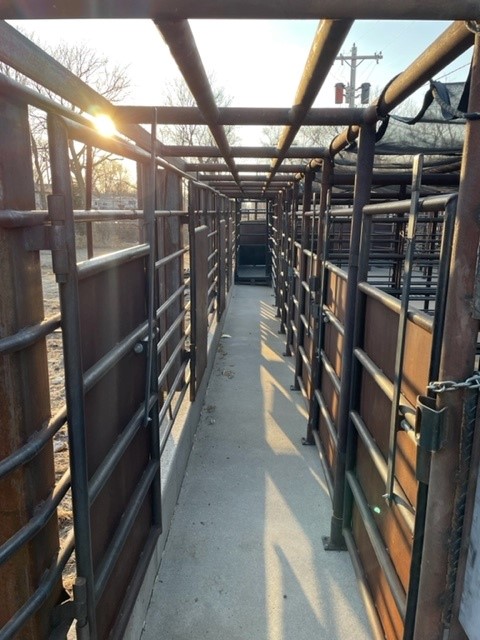
Alley width, length and crowd-out
The alley is where most jobs live or die. Get the width right and the work disappears. Here's what we design to in NCK:
- Mature beef cows (1,200–1,500 lb): 26–28" inside width.
- Stockers / yearlings (650–900 lb): 22–24" inside.
- Mixed herd: 26" with adjustable bow gates so you can choke down for smaller cattle.
- Length: 16–24 ft of single-file alley before the chute is the sweet spot. More than that and cattle stall.
- Walls: solid sheeted (not see-through) for the last 8 feet before the chute. Cattle move better when they can't see what's ahead.
"We rebuilt a sort alley near Concordia last spring - same length, but we widened it from 22 to 27 inches and solid-sheeted the last 10 feet. Owner said his work-through time dropped by half on the very first run."
Materials: pipe, panel, continuous fence
We mix and match based on where the steel is going. Quick guide:
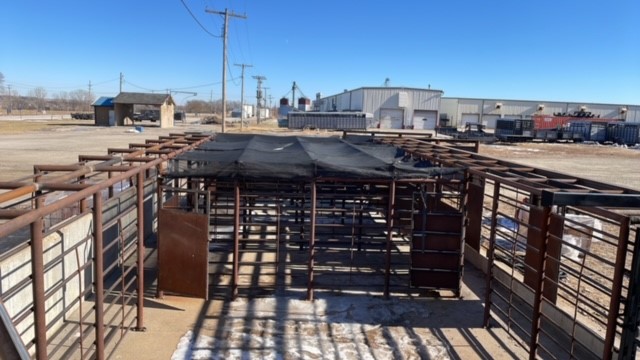
- Heavy-wall pipe (2 7/8" or 3 1/2" OD): the alley, the crowd tub, the head-chute approach, anywhere cattle hit hard. Don't cheap out here.
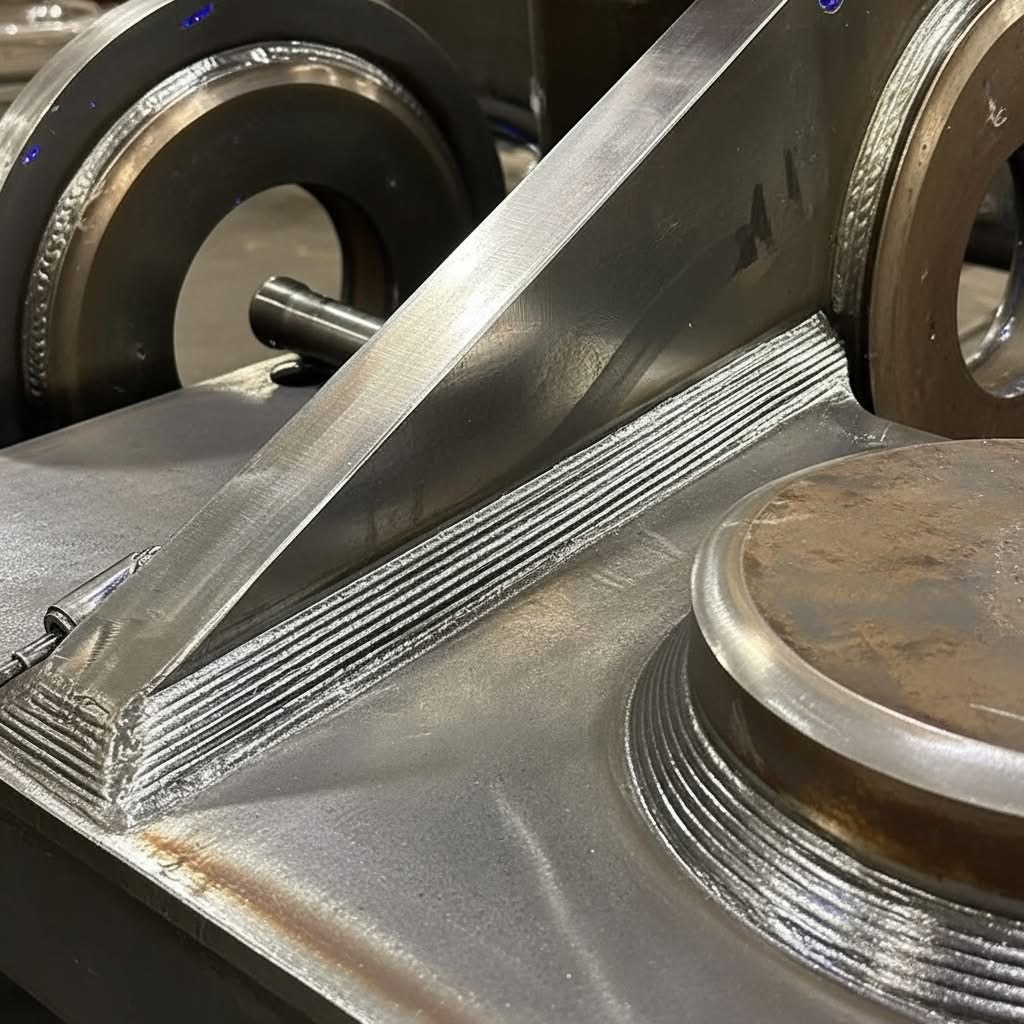
- Welded panels: sort pens, working pens, anywhere you need a configurable pen system. We weld our own - much heavier than the import stuff at the box stores.
- Continuous fence (4-rail or 5-rail): perimeter, large holding pens, hospital pens. Fast to install, cheap per foot, plenty strong for low-pressure containment.
- Cable / wood: not in our cattle pens. Period. (Cable is fine for windbreaks.)
Want a deeper look at the trade-offs? See our breakdown of continuous fence vs pipe vs panel pens for Kansas operations.
Want a no-pressure layout sketch for your place?
Send us a photo or a rough drawing of your current setup and what you wish it did better. We'll come back with ideas - no quote required.
Send Us Your LayoutLoading chutes & truck access
If you load semis, your load-out is as important as your alley. Common things we see and fix:
- Chute angle too steep. 20° max. Steeper than that and cattle balk. We build adjustable chutes that work for both 53' pots and gooseneck stock trailers.
- No staging pen. You need a small holding pen at the bottom of the load chute so cattle don't see open air behind them.
- Truck can't back square. 60' of straight back-up room is the minimum. Add gravel base - Kansas mud will eat any approach pad that isn't built right.
What custom pens actually cost in Kansas
Approximate, installed, in NCK in 2026:
- Basic working setup (Bud Box, single alley, head-chute approach): $18,000 – $35,000
- Mid-size facility (sweep tub, alley, 3 sort pens, load chute): $45,000 – $80,000
- Full sort-and-load (multiple holding pens, hospital pen, scale alley, drive-through load): $90,000 – $200,000+
Concrete and dirt work are usually separate. We can quote everything turnkey or just the steel - depends what fits your operation.
Frequently asked questions
Who builds custom cattle pens near Clay Center, KS?
Parker Welding & Fabrication. Family-owned, in Clay Center, building working facilities across Clay, Riley, Cloud, Washington, Republic, Geary and Marshall counties. (785) 747-7600.
How long does a custom pen build take?
From signed quote to working facility: usually 4 to 10 weeks depending on size, material lead times, and dirt work. Smaller alley-and-chute jobs can wrap in 2 weeks.
How wide should a cattle alley be?
26–28" for mature beef cows, 22–24" for stockers. Adjustable bow gates let you choke a wider alley down for smaller cattle.
Bud Box or sweep tub?
Bud Box for small/mid operations and low-stress handling on a budget. Sweep tub when you're moving 100+ head in a session and need throughput. Both work - bad design wrecks either.
Will you travel outside NCK for a build?
Yes. We routinely work all of Kansas plus Nebraska, Missouri and Oklahoma. Bigger jobs we'll travel further - recent work has gone to North Dakota.
Let's design something that actually works.
Tell us about your operation and what's giving you headaches. We'll come look at it.
Get My Free Quote