"Just give me the cheapest stuff that holds cows" is one of the most expensive sentences in cattle ranching. Pen material isn't a single decision - it's three or four decisions, made spot by spot on your operation. Here's how we think about it from our shop in Clay Center, Kansas, and what we recommend across NCK.
What's in this guide
Continuous fence: cheap, fast, perfect for perimeter
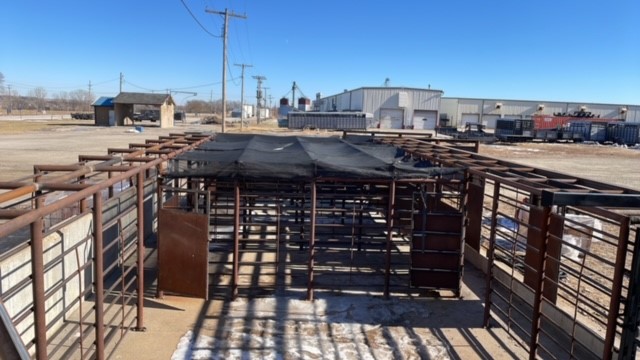
Continuous fence is the steel-rail fence you see across half of Kansas - 4 or 5 horizontal rails (often 1¼" or 1¾" diameter), bolted or welded to driven steel posts, in 20-foot sections.
Best for:
- Perimeter fencing
- Large holding pens with low cattle pressure
- Hospital pens and turnout traps
- Anywhere you need a lot of length cheaply
Where it falls short:
- High-pressure work areas (alleys, crowd tubs)
- Anywhere you need configurability - once it's bolted to posts, it's not moving
- Heavy bull pens - bulls bend rails
Pipe corral: the bombproof option
Heavy-wall steel pipe (commonly 2 7/8" or 3 1/2" OD) used for posts, top rails and structural members. The standard for serious working pens.
Best for:
- Working alleys and crowd tubs (the highest-pressure spots)
- Head-chute approaches
- Sort gates and high-traffic pinch points
- Bull pens, breeding pens
- Loading chutes and wing fences
Where it falls short:
- Cost - by far the most expensive per foot
- Overkill for low-pressure perimeter
Most of our oilfield-pipe stock comes through Kansas regional yards. Used / reclaimed pipe can be a great option if it's been inspected - we won't use anything with corrosion pitting deeper than the spec allows.
Welded panels: configurable working pens
10' or 12' welded steel panels - typically 6 or 7 horizontal rails of 1.66" or 1.9" pipe - connected with pin-and-loop or bolt-and-clip systems.
Best for:
- Sort pens that need to reconfigure for different jobs
- Temporary or portable working setups
- AI pens, bull pens, calving pens
- Mid-pressure holding pens
Where it falls short:
- Cheap import panels bend on first contact with a real cow. Buy heavy.
- Pin connections wear over time and need maintenance
- Less wind-resistant than continuous fence in long runs
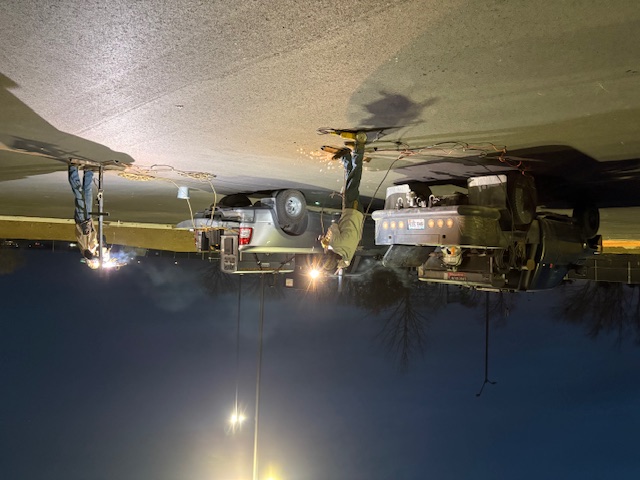
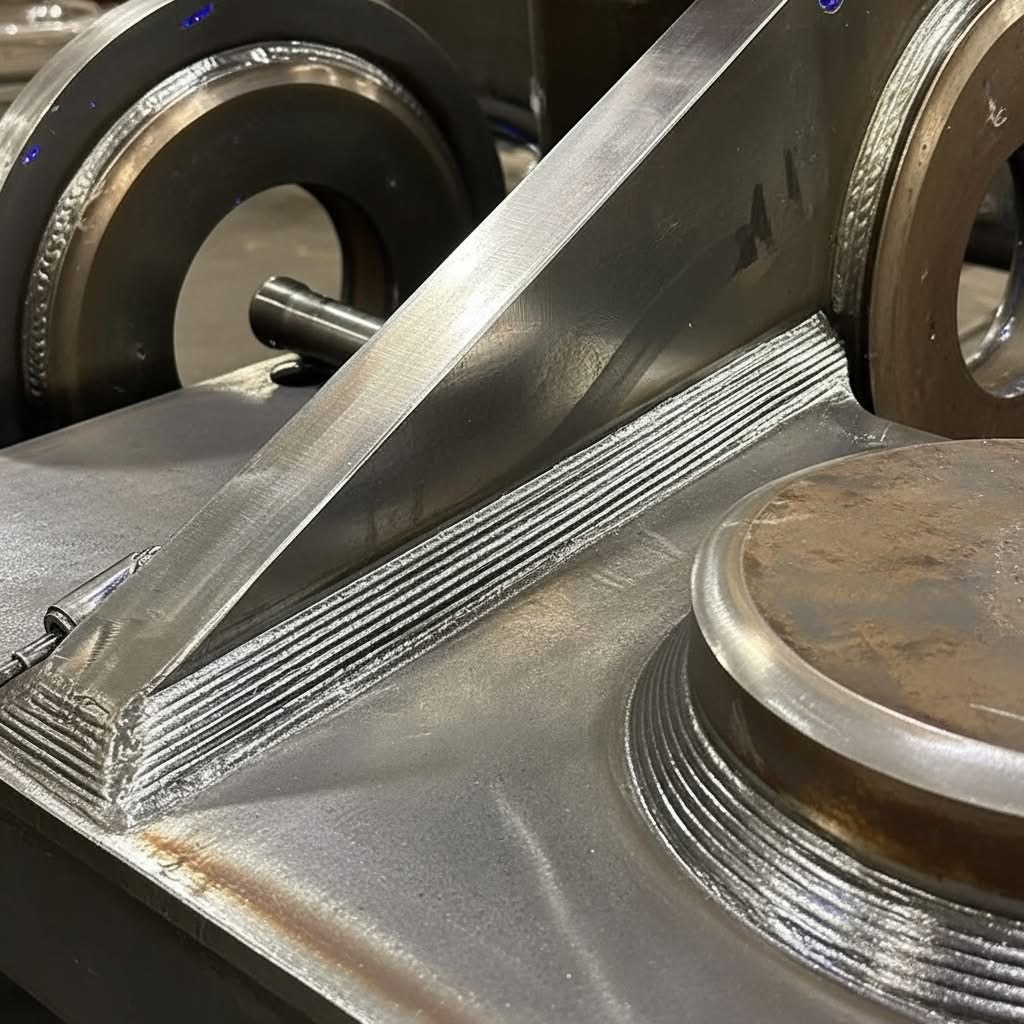
We weld our own panels in Clay Center using heavier-wall pipe than what most box stores stock. They cost more, they last 3x longer.
The mix-and-match rule
If you take one thing from this article: a smart Kansas pen system mixes all three materials. Here's our default starting point for a small-to-mid operation in NCK:
- Perimeter (1,000+ ft): 5-rail continuous fence, painted, on driven schedule-40 pipe posts
- Holding pens: Continuous fence or heavy welded panels
- Sort pens: Welded panels (so you can reconfigure later)
- Crowd tub / Bud Box: Heavy pipe construction, pipe rails
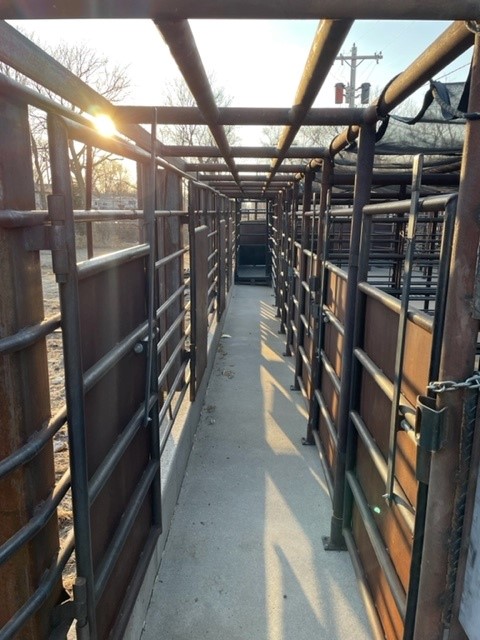
- Working alley: Heavy pipe with welded mesh/sheeting on the lower 36"
- Head-chute approach: Heavy pipe, solid sheeted
- Loading chute: Pipe construction, wood or rubber decking
That setup costs more upfront than "all continuous fence" - and lasts decades longer.
Need help laying it out?
Send us a satellite photo of your current pens and what you wish they did better. We'll come back with a layout sketch.
Send My LayoutWhat Kansas weather does to each
Wind
NCK sustained winds of 30-40 mph are normal in spring. Continuous fence handles wind beautifully because it's flexible and presents little surface area. Welded-panel runs longer than 60 feet without bracing can rack - we always brace long panel runs.
Snow load
Drifts pile against any vertical face. Solid-sheeted alley walls catch snow - clear them after storms or they'll rust at ground level. Continuous fence sheds snow naturally.
Mud (the real enemy in NCK)
Clay soil heaves with the freeze-thaw cycle. Posts driven 36" don't move. Posts driven 18" move. We drive ours 36"+ minimum. Concrete-set posts work great in non-frost zones; in NCK they can heave a whole concrete plug if water gets under it.
Sun & rust
Bare steel rusts. Powder coat lasts 15–25 years. Spray paint over good prep lasts 8–12. Plan to repaint or refinish your pens once a decade.
Per-foot installed cost in NCK (2026)
Approximate ranges, installed, in north-central Kansas:
- 5-rail continuous fence (light grade): $9–$13/ft
- 5-rail continuous fence (heavy grade, painted): $13–$18/ft
- Heavy welded panels (premium 12-ft sections): $22–$35/ft
- Pipe corral (3½" pipe, welded): $35–$55/ft
- Heavy pipe alley with sheeting: $80–$140/ft (specialty)
For more on the bigger picture of building a working facility, see our guide to custom cattle pens in north-central Kansas.
Frequently asked questions
What's the cheapest cattle pen material per foot in Kansas?
Continuous fence - typically $9–$18/ft installed depending on grade.
How long does continuous fence last in Kansas weather?
15–25+ years. Properly painted/coated and on heavy posts, you'll see 25+. Posts are usually the first thing to fail, not the rails.
Is heavy pipe worth it for working pens?
Yes - for the alley, the tub, the chute approach. Continuous fence in those spots will bend within 5 years.
Can you build me a portable / panel system that I can move?
Yes. We build heavy welded panels with pin systems sized to whatever pickup or trailer you'll be hauling them with.
Will Parker Welding come measure and quote on-site in NCK?
Yes - free site visits in Clay, Riley, Cloud, Washington, Republic, Geary and Marshall counties. (785) 747-7600.
Build it once. Build it right.
Tell us about your operation. We'll quote a system that mixes the right material for the right spot - and lasts decades.
Get My Free Quote